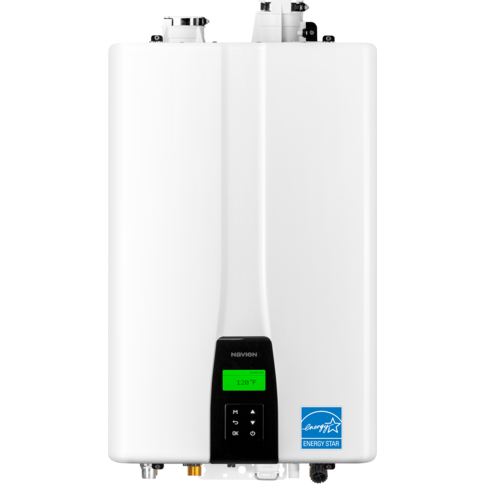
Running out of hot water halfway through a shower is a familiar complaint in Grand Strand homes, especially when a rental fills up for the week or family is in town for the holidays. A tankless water heater is one of the most common upgrades homeowners in Myrtle Beach, Pawleys Island and Murrells Inlet ask us about. Here is a plain-language look at how tankless units work, when they make sense, and what to think about before you switch.
How a tankless water heater works
A traditional tank heater keeps 40 to 80 gallons of water hot around the clock. A tankless unit heats water only when you open a tap: water flows through a heat exchanger, a gas burner or electric element fires, and hot water comes out the other side. Because nothing is stored, you don't run out the way you do with a tank. The limit is flow rate instead: each unit can heat a certain number of gallons per minute, so sizing it to how many fixtures you run at once matters.
When tankless is a good fit
- Busy households and vacation rentals. Back-to-back showers are where tankless shines.
- Homes short on space. A wall-mounted unit frees up the closet or garage corner a tank used to take.
- An aging tank. If your tank heater is nearing the end of its life, replacement time is the natural moment to compare options.
- Gas already at the house. Gas tankless units handle high demand well; if you have natural gas or propane, installation is usually simpler.
When a tank may still be the better choice
Tankless isn't right for every home. Switching can mean new gas piping, venting or electrical work, so the upfront cost is higher than a like-for-like tank swap. Whole-home electric tankless units need a lot of electrical capacity that many homes don't have. And if your household rarely uses more than one fixture at a time, a correctly sized tank, or a hybrid heat pump water heater, may serve you just as well. A good plumber will walk through both options with you rather than push one.
Tankless care on the coast
Minerals in the water slowly build up inside any water heater. In a tankless unit, that scale collects in the heat exchanger and can reduce flow and efficiency, so manufacturers recommend periodic flushing (descaling). Homes on well water or with hard water may need it more often, and a water filtration or softening system can help. If your unit is in a garage or on an exterior wall near the ocean, salt air is worth keeping in mind too: keep vents and intake screens clear and have the unit checked during routine maintenance.
Brands we install
Dependable Service installs and services water heaters from Navien, Rinnai and A. O. Smith, so we can compare tankless and tank options side by side for your home. Financing is available. Learn more on our tankless water heater page or see all water heater services.
Tankless water heater FAQs
Will a tankless water heater give me endless hot water?
It won't run out the way a tank does, but it can only heat so many gallons per minute. If several showers, the dishwasher and the washer all run at once, an undersized unit will struggle. Proper sizing, and sometimes two units, solves that.
Can my existing tank water heater be replaced with tankless?
Usually, yes, but it often takes changes to gas lines, venting or electrical service. A plumber should look at what's already in place before recommending a model.
Do tankless water heaters need maintenance?
Yes. Periodic descaling keeps mineral buildup from reducing performance, and an annual check is a good habit. If your unit is showing error codes or the water runs lukewarm, our water heater repair team can help.
Thinking about switching?
Call Dependable Service at (843) 353-0461, Monday through Friday, 7 a.m. to 5 p.m., to talk through tankless versus tank for your home. We serve Myrtle Beach, Pawleys Island, Murrells Inlet and the rest of the Grand Strand from our office at 166 Tiller Dr in Pawleys Island.